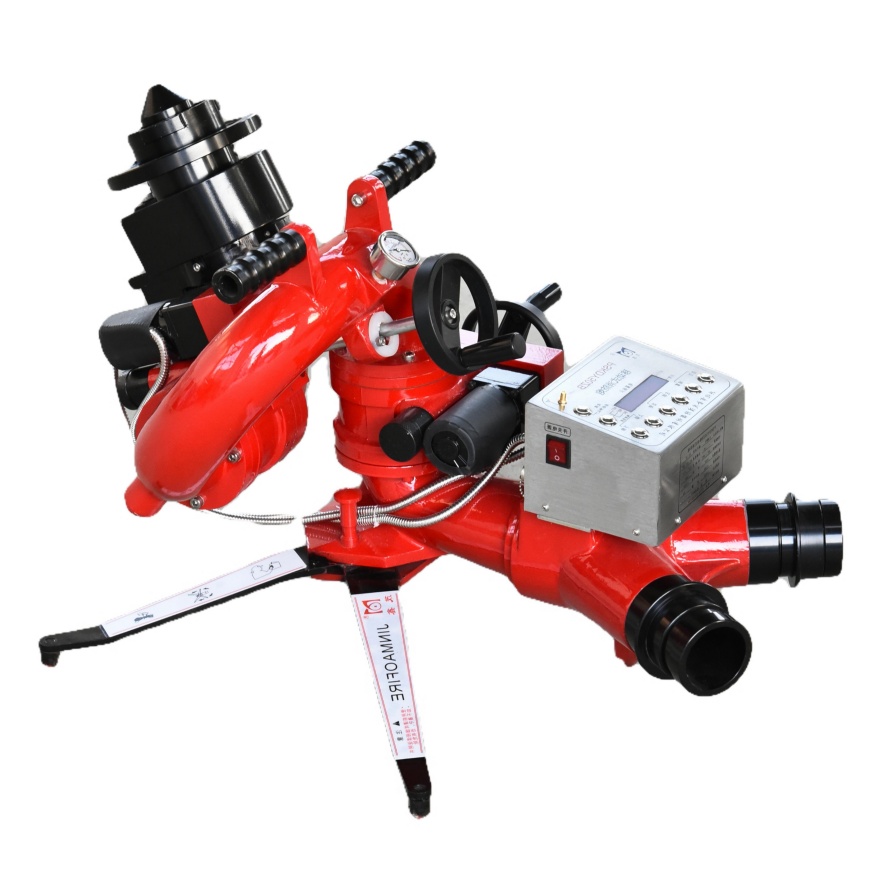
In the realm of fire safety and prevention, the evolution of technology has played a pivotal role in safeguarding lives, property, and critical infrastructure. Among the innovations that have significantly contributed to fire suppression systems, the automatic fire monitor stands out as a key component, revolutionizing firefighting techniques and enhancing overall safety measures.
Understanding Automatic Fire Monitors
Automatic fire monitors, often referred to as water cannons or water monitors, are devices designed for fire suppression and control. These systems are automated and remotely controlled, delivering high volumes of water, foam, or other extinguishing agents to combat fires in various settings, including industrial facilities, airports, refineries, and even aboard ships.
The Early Beginnings
The inception of automatic fire monitors can be traced back to the mid-19th century when engineers and innovators began exploring ways to mechanize fire suppression methods. Early designs of manually operated water monitors were employed to douse fires in factories and warehouses. However, these rudimentary systems lacked the automation and precision of modern-day monitors.
Technological Advancements
Over time, technological advancements have transformed fire monitors into highly efficient and sophisticated systems. The integration of sensors, actuators, and advanced control mechanisms has elevated their effectiveness in combating fires swiftly and accurately.
Remote Monitoring and Control
One of the significant advancements in automatic fire monitors is the incorporation of remote monitoring and control capabilities. This feature allows firefighters or designated personnel to operate the monitors from a safe distance, ensuring enhanced safety during firefighting operations.
Integration of AI and Machine Learning
Recent developments have seen the integration of artificial intelligence (AI) and machine learning algorithms into fire monitoring systems. These technologies enable monitors to analyze fire patterns, optimize water distribution, and make real-time decisions for more targeted and efficient fire suppression.
Applications Across Industries
Automatic fire monitors find extensive applications across various industries, providing tailored solutions to meet diverse fire safety needs.
Industrial Facilities
In industrial settings, where the risk of fires due to flammable materials or processes is high, fire monitors play a critical role. They are strategically placed to cover large areas and swiftly address fire incidents, mitigating potential damage and ensuring worker safety.
Oil Refineries and Petrochemical Plants
The highly volatile nature of substances handled in oil refineries and petrochemical plants necessitates robust fire safety measures. Automatic fire monitors, equipped with specialized foams or extinguishing agents, are deployed to swiftly contain and extinguish fires in these environments.
Port Facilities and Ships
Ports and ships face unique fire safety challenges due to the presence of combustible materials and confined spaces. Automatic fire monitors installed on ships and within port facilities are essential in providing immediate and targeted responses to fire emergencies, safeguarding both personnel and valuable cargo.

Advantages of Automatic Fire Monitors:
- Rapid Response: Fire monitors offer rapid response times in the event of a fire outbreak. These systems are designed to detect fires quickly and initiate a swift and targeted response, minimizing the spread of fire and potential damage.
- Remote Operation: They can be operated remotely, allowing firefighters or designated personnel to control and direct the monitors from a safe distance. This capability enhances safety by reducing the need for individuals to be near the fire.
- High Volume Discharge: Automatic fire monitors are capable of discharging high volumes of water, foam, or other extinguishing agents. This high discharge rate enables efficient fire suppression, particularly in large-scale industrial or commercial settings.
- Precision and Accuracy: These systems are engineered for precision and accuracy in delivering firefighting agents to the specific area affected by the fire. This targeted approach helps in containing and extinguishing fires more effectively while minimizing collateral damage.
- Versatility in Applications: They have versatile applications across various industries, such as industrial facilities, refineries, ports, and ships. Their adaptability to different environments makes them an essential firefighting tool in diverse settings.
- Continuous Monitoring: Some advanced automatic fire monitors integrate sensors and monitoring systems that continuously assess the fire situation. This real-time monitoring ensures prompt adjustments in firefighting strategies for optimal effectiveness.
- Integration of Advanced Technologies: The incorporation of AI, machine learning, and IoT in modern fire monitors allows for predictive analysis, optimized resource allocation, and proactive maintenance, enhancing overall efficiency.
- Enhanced Safety Measures: By providing an effective means of fire suppression, automatic fire monitors contribute significantly to enhancing safety measures in workplaces, public spaces, and critical infrastructure, safeguarding lives and property.
- Customization and Adaptability: These systems can be customized and adapted to suit specific fire safety needs, enabling tailored solutions for different industries and environments.
- Reduced Human Intervention: Minimizing the need for extensive human intervention during firefighting operations reduces potential risks to firefighters, allowing them to focus on other critical tasks during emergencies.
Future Prospects and Innovations
The continuous evolution of automatic fire monitors is driven by ongoing research and development initiatives aimed at further enhancing their capabilities and efficiency.
IoT Integration for Enhanced Monitoring
Integration with the Internet of Things (IoT) is anticipated to revolutionize fire monitoring systems. IoT-enabled sensors and connectivity will enable real-time data collection and analysis, allowing for predictive maintenance and more proactive firefighting strategies.
Sustainable Extinguishing Agents
Another area of focus is the development of eco-friendly and sustainable extinguishing agents. Researchers are exploring alternatives to traditional firefighting chemicals to minimize environmental impact without compromising fire suppression effectiveness.
Conclusion
The evolution of automatic fire monitors has been instrumental in transforming firefighting practices, ensuring quicker responses, and minimizing the devastating effects of fires across various sectors. With ongoing technological advancements and innovative solutions, these systems continue to play a pivotal role in enhancing safety standards and protecting lives and assets from the destructive force of fires.
As we move forward, it is imperative to invest in research and development to further refine and improve automatic fire monitors, ultimately bolstering our capabilities in fire prevention and suppression.