
Introduction
In the realm of firefighting, every second counts. Efficient and reliable equipment can make all the difference in saving lives and minimizing property damage. One crucial component in firefighting equipment that often goes unnoticed is the coupling system. Among the various types available, the French coupling stands out for its exceptional performance and versatility. This article delves into the application of French coupling in firefighting equipment, exploring its design, advantages, and real-world applications.
Understanding French Coupling
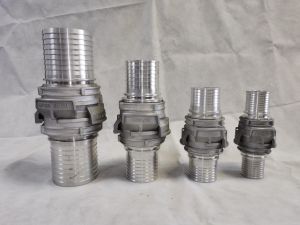
French coupling, also known as Guillemin coupling, is a type of quick-connect coupling widely used in firefighting equipment, particularly in Europe. Its design features symmetrical half-couplings that can be easily connected and disconnected with a quarter turn. This simplicity and speed of connection make French-type coupling ideal for firefighting operations where rapid deployment is critical.
The coupling comprises two main components: the male adapter and the female coupling. The male adapter typically features external lugs or a locking ring, while the female coupling has recessed lugs or grooves to accommodate the lugs of the male adapter. This design ensures a secure and leak-proof connection, even under high pressure.
Advantages of French Coupling
The application of French-type coupling in firefighting equipment offers several advantages:
- Rapid Deployment: One of the primary benefits of French coupling is its quick-connect mechanism. Firefighters can swiftly assemble hoses and other equipment, saving valuable time during emergencies.
- Interchangeability: French-type couplings are designed to be interchangeable with compatible couplings, allowing firefighters to use hoses and equipment from different manufacturers without compatibility issues.
- Leak-proof Seal: The design of the French-type coupling ensures a tight seal between the male adapter and the female coupling, minimizing the risk of leaks and ensuring efficient water delivery to the fire scene.
- Durability: Constructed from high-quality materials such as aluminum, brass, or stainless steel, French couplings are built to withstand the rigors of firefighting operations, including exposure to heat, water, and mechanical stress.
- Versatility: French couplings are versatile and can be used in various firefighting scenarios, including hose connections, hydrant connections, and pump connections.
Real-world Applications
French coupling finds extensive application in various firefighting equipment and systems:
- Fire Hoses: French-type couplings are commonly used in fire hoses for connecting multiple lengths of hose or attaching nozzles and other accessories. The quick-connect feature allows firefighters to rapidly deploy and maneuver hoses to extinguish fires effectively.
- Fire Hydrants: Many fire hydrants are equipped with French couplings for easy connection to fire hoses. Firefighters can quickly establish a water supply from hydrants to fight fires without wasting precious time on cumbersome connection processes.
- Pump Systems: French-type couplings play a crucial role in pump systems used in firefighting vehicles and portable pumps. The quick-connect feature enables firefighters to swiftly attach and detach hoses to pump outlets, ensuring efficient water delivery to the fire scene.
- Foam Systems: In addition to water delivery, French-type couplings are also used in foam systems for firefighting. The compatibility of French-type couplings with foam proportioning devices allows firefighters to easily integrate foam solutions into their firefighting operations.
Emerging Trends and Future Developments
While French coupling has been a staple in firefighting equipment for decades, ongoing technological advancements continue to shape its application and usage. Some emerging trends and future developments in the realm of French type coupling in firefighting equipment include:
- Integration with Smart Technology: With the rise of smart firefighting equipment, there is potential for French couplings to be integrated with sensors and monitoring devices. These innovations could provide real-time data on water flow rates, pressure levels, and equipment status, enhancing situational awareness and operational efficiency.
- Lightweight Materials: As the firefighting industry seeks to reduce the weight of equipment carried by firefighters, there is growing interest in lightweight materials for French couplings. Advancements in materials science may lead to the development of high-strength yet lightweight alloys or composite materials, improving portability without compromising durability.
- Enhanced Interoperability: Interoperability remains a key focus in firefighting operations, particularly during large-scale incidents involving multiple agencies and jurisdictions. Efforts to standardize coupling designs and compatibility protocols can facilitate seamless integration and collaboration among firefighting teams, regardless of their equipment preferences or geographic locations.
- Eco-Friendly Solutions: With increasing awareness of environmental sustainability, there is a growing demand for eco-friendly firefighting solutions, including coupling systems. Manufacturers may explore eco-friendly materials and manufacturing processes to minimize environmental impact while maintaining performance and reliability.
- Customization and Adaptability: Firefighting operations vary widely in terms of terrain, climate, and hazards. Customizable and adaptable French coupling systems that can be tailored to specific operational needs may become more prevalent, allowing firefighters to optimize their equipment configurations for different scenarios and environments.
Conclusion
The application of French coupling in firefighting equipment offers unparalleled advantages in terms of speed, reliability, and versatility. Its quick-connect mechanism, leak-proof seal, and durability make it an indispensable component in the arsenal of firefighting professionals. As firefighting techniques and equipment continue to evolve, French-type coupling remains a steadfast and trusted solution for ensuring effective firefighting operations worldwide.


