Introduction
In the critical realm of fire protection, every component of firefighting equipment plays a pivotal role in safeguarding lives and property. Among these components, British Standard (BS) couplings stand out as integral connectors in fire protection systems. This article delves into the significance of BS coupling in fire protection equipment, highlighting its role, advantages, and real-world applications in ensuring effective firefighting operations.
Ensuring Compatibility and Interoperability
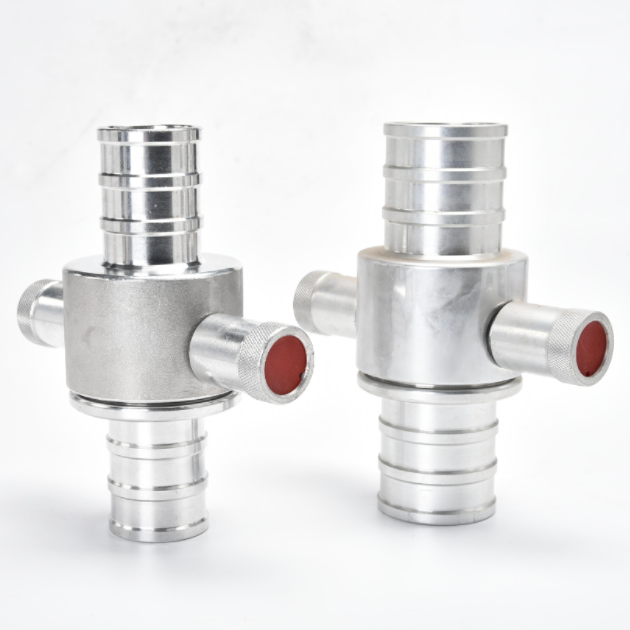
One of the primary reasons for the importance of BS coupling in fire protection equipment is its adherence to standardized dimensions and specifications. BS couplings are designed to comply with British Standards Institution (BSI) requirements, ensuring compatibility and interoperability across various firefighting equipment and systems. This standardization allows firefighters to seamlessly connect hoses, hydrants, pumps, and other components, facilitating rapid deployment and efficient water delivery during emergencies.
Enhanced Reliability and Durability
BS couplings are engineered for reliability and durability, capable of withstanding the rigors of firefighting operations. Constructed from high-quality materials such as brass, aluminum, or stainless steel, BS-type couplings exhibit excellent resistance to corrosion, abrasion, and mechanical stress. This robust construction ensures that BS-type couplings maintain their integrity under demanding conditions, providing firefighters with confidence in the performance and longevity of their equipment.
Efficient Water Delivery and Fire Suppression
In fire protection applications, the timely delivery of water is paramount for effective fire suppression. BS couplings facilitate efficient water transfer by creating secure and leak-proof connections between hoses, hydrants, and pumps. The tight seal provided by BS couplings minimizes water loss and pressure drop, maximizing the reach and effectiveness of firefighting streams. This efficient water delivery capability enables firefighters to swiftly extinguish fires and prevent their spread, mitigating damage and saving lives.

Versatility and Adaptability
BS couplings offer versatility and adaptability to accommodate diverse firefighting scenarios and environments. Whether in urban settings, industrial facilities, or rural areas, BS couplings can be seamlessly integrated into fire protection systems to meet specific operational requirements. Their compatibility with various hose sizes, nozzle types, and water sources allows firefighters to tailor their equipment configurations for optimal performance in different situations. This versatility ensures that firefighters have the flexibility to adapt their tactics and strategies to effectively combat fires of varying magnitudes and complexities.
Emerging Trends and Future Developments
While BS couplings have long been fundamental to fire protection equipment, ongoing advancements in technology and firefighting practices continue to shape their role and application. Several emerging trends and future developments are poised to further enhance the importance of BS-type coupling in fire protection:
- Integration with Smart Technology: As the firefighting industry embraces digitalization, BS couplings may be equipped with sensors and monitoring devices to provide real-time data on water flow rates, pressure levels, and equipment status. This integration with smart technology can enhance situational awareness, improve operational efficiency, and facilitate predictive maintenance of firefighting systems.
- Enhanced Materials and Coatings: Innovations in materials science may lead to the development of advanced alloys and coatings for BS-type couplings, offering enhanced resistance to corrosion, abrasion, and extreme temperatures. These improvements in materials and coatings can prolong the service life of BS couplings, reduce maintenance requirements, and enhance their performance in harsh environments.
- Modular and Customizable Designs: Fire protection systems are increasingly adopting modular and customizable designs to meet the evolving needs of firefighting operations. BS-type couplings may feature modular components that allow for easy customization and configuration, enabling firefighters to adapt their equipment layouts for specific applications, such as high-rise firefighting or wildland firefighting.
- Environmental Sustainability: With growing concerns about environmental sustainability, there is a rising demand for eco-friendly firefighting solutions, including BS-type couplings. Manufacturers may explore eco-friendly materials and manufacturing processes to minimize the environmental impact of BS couplings while maintaining their performance and reliability.
- Global Standardization and Harmonization: Efforts to harmonize firefighting standards and regulations on a global scale may lead to greater standardization of BS-type couplings worldwide. Aligning specifications and requirements across different regions can facilitate international cooperation, interoperability, and the exchange of firefighting equipment and expertise during cross-border emergency response efforts.
Conclusion
In conclusion, BS coupling plays a vital role in fire protection equipment by ensuring compatibility, reliability, efficiency, and versatility in firefighting operations. Its adherence to standardized dimensions, robust construction, and efficient water delivery capabilities make it an indispensable component of modern firefighting systems. By facilitating seamless connections, maximizing water flow, and adapting to diverse operational needs, BS-type coupling enables firefighters to effectively combat fires and protect lives and property. As the firefighting industry continues to evolve, the importance of BS coupling in fire protection equipment remains paramount, reaffirming its status as a cornerstone of fire safety and emergency response.